
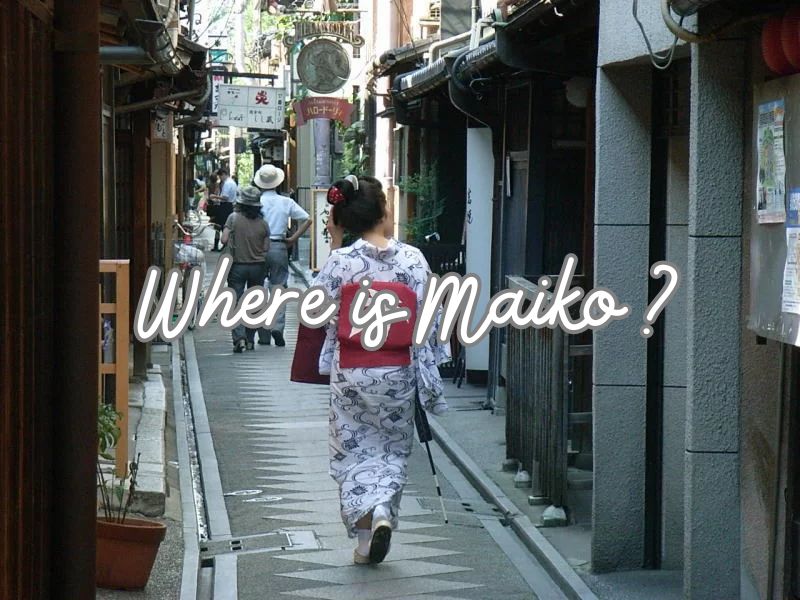
Where to see Maiko in Kyoto: Off-the-Beaten-Path Spots
Maiko practices in the morning and closes in the afternoon until around 3 p.m., when she applies her cosmetics and gets dressed. In the evening, go to Ozashiki, where Maiko entertains guests.
Well, where is the best place to meet Maiko? How can you see Maiko?
Where to see Maiko: Hanamikoji
The first thing that comes to mind when you hear the phrase “a place where you can find maiko” in Kyoto is Hanamikoji-dori in Gion.
However, when there are a large number of international tourists, it becomes extremely crowded. You may not be able to meet Maiko at leisure.
Hanamikoji Map
About a 3-minute walk from the city bus Gion bus stop A (blue bus mark), about a 3-minute walk from C stop
About a 3-minute walk from Keihan Gion Shijo Station, Exit 6
About a 5-minute walk from Hankyu Kyoto Kawaramachi Station, 1B Exit
About a 6-minute walk from the southeast corner of the Shijo Kawaramachi intersection
Off-the-beaten-path spot: Miyagawacho
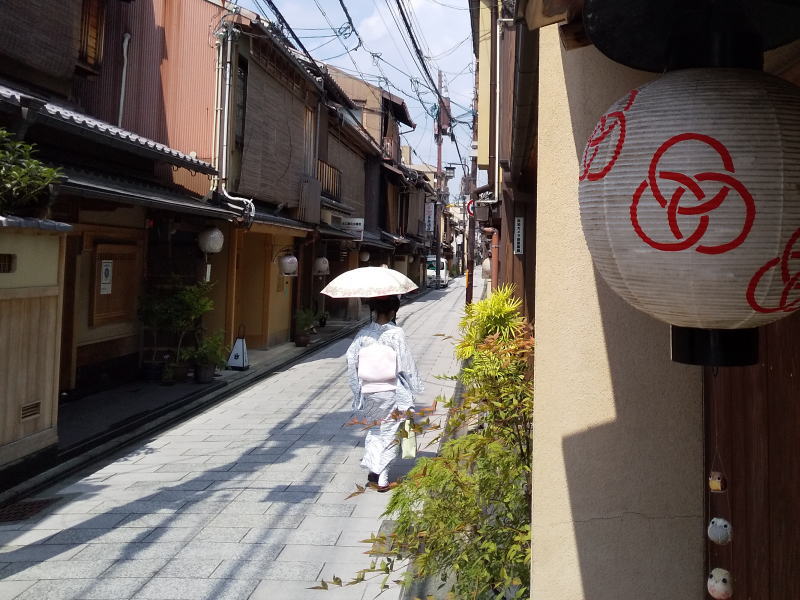
Miyagawacho is my top recommendation for an off-the-beaten-path spot.
Compared to Hanamikoji, it has significantly fewer tourists. If you find yourself overwhelmed by the crowds at Hanamikoji, please head over to Miyagawacho. You will be surprised by how peaceful it is.
It is about a 5-minute walk from Hanamikoji-dori in Gion.The cobblestoned street is lined with teahouses, and you can enjoy the typical Kyoto scenery. Teahouses are residences where people have a Japanese-style party, invite Maiko or Geisha, and enjoy her performances.
You may also find Maiko practicing in the morning or during breaks!
While Pontocho is also near the station, its narrow streets can be a bit of a drawback.
Miyagawacho Map
About a 10-second walk from Keihan Gion Shijo Station, Exit 1
About a 4-minute walk from Hankyu Kyoto Kawaramachi Station, 1B Exit
Where to see Maiko: Pomtocho
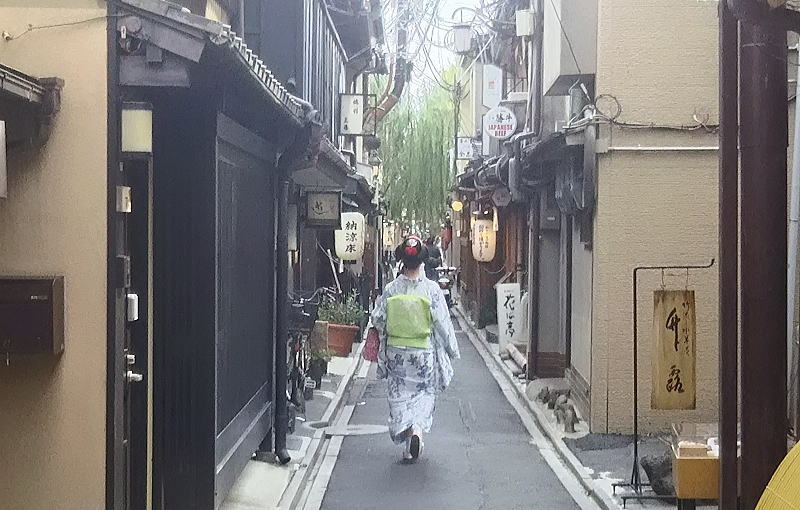
There are also Maiko in Pontocho. Pontocho is close to Keihan and Hankyu stations and bus stops, making it more convenient to access than Hanamikoji and Miyagawacho.
However, it is not as crowded as Hanamikoji, but there are more tourists. And the street is narrow. Even in Pontocho, you may see Maiko going out to practice or taking breaks.
The photo above was taken at Pontocho around 2 p.m. If you go between 2 and 3 p.m., you might see some Maiko out on their break.
Pontocho Map
About a 30-second walk from Hankyu Kyoto Kawaramachi Station, 1A Exit
About a 2-minute walk from Keihan Gion Shijo Station, Exit 1
Where to see Maiko: Another alternative
Kamishichiken, which has the same entertainment district as Hanamikoji and Miyagawacho, is slightly further from the city center but has significantly fewer tourists. Kitano Tenmangu Shrine is nearby and can be visited as well.
How to be sure to see Maiko
Even if you go to places like Hanamikoji or Miyagawacho, there is no guarantee that you will be able to meet Maiko. Even if you are lucky enough to see Maiko, it may only be for a moment.
Some people might say, “I want to meet Maiko in a more relaxed and reliable way!” But you need to hang out with Maiko at the teahouse. Teahouses are residences where people have a Japanese-style party, invite Maiko or Geisha, and enjoy her performances. However, the teahouse does not accept first-time customers, so it is impossible for tourists to enter without an introduction.
So, is there no choice but to give up?
To be certain, you can try:
Maiko plans at ryokans or restaurants.
Gion Corner (cultural performances).
Summer-only Maiko Beer Gardens (in Kamishichiken and Pontocho).
There are also casual ‘Maiko Activities‘ available these days.
Where Maiko is: Kyoto-Gokagai (Kyoto Five-Hanamachis)
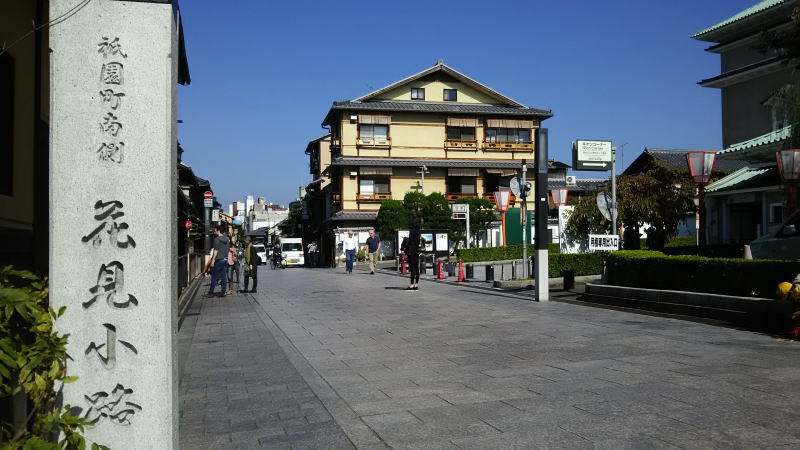
There are five Hanamachies in Kyoto. Kamishichiken, Gion Kobu, Gion Higashi, Pontocho, and Miyagawacho
Hanamachi is a place where Maiko and Geisha live in Kyoto.(Maiko and Geisha districts) Maiko are apprentices training to become Geiko, and Geiko is the term used for Geisha in the old capital Kyoto.
Kamishichiken
Kamishichiken began when Kitano Tenmangu Shrine was rebuilt during the Muromachi period, and seven teahouses were built using leftover lumber.
In 1587, when Toyotomi Hideyoshi held a tea party in Kitano, he presented the famous dango, and Hideyoshi apparently liked the taste. This is why Kamishichiken uses the five-dango emblem.
Gion Kobu
Gion Kobu is located on Hanamikoji, as introduced above. This is the first place that comes to mind when you think of a place where you can find maiko in Kyoto. Gion Kobu is the largest of the Kyoto Gokagai and has the largest number of Maiko. It is said that teahouses originated around the beginning of the Edo period, when a teahouse in front of the gates of Yasaka Shrine began offering tea and dango to worshipers and cherry blossom-viewing visitors. Teahouses spread out in front of the gates of Yasaka Shrine and eventually formed the Hanamachi, such as Hanamikoji.
Gion Higashi
1881: Separated from Gion Kobu and became independent. At first, Gion Higashi was called Gion Otobu, but after the war, the name was changed to Gion Higashi.
Pontocho
The construction of the Kamogawa river bank in the early Edo period marked the beginning of Pontocho.
At first, it was a business for sailors on boats going back and forth between Fushimi and Kyoto, but in 1859, permission was obtained, and it began to develop as Hanamachi. Today’s Pontocho is a narrow street lined with teahouses and restaurants.
Miyagawacho
Miyagawacho is located to the west of Kenninji Temple. It has a history of about 260 years and currently boasts the second-highest number of Maiko after Gion Kobu.
Additionally, Miyagawacho is especially focused on training Maiko among the Kyoto-Gokagai (Five Hanamachis).
How to Become a Maiko
There is a trial period before one can officially become a maiko.
Aspiring maiko must live in an “Okiya” (lodging house), helping with daily chores while learning traditional dance, the Kyoto dialect, and the customs of the Hanamachi (geisha districts).
For those originally from the Kansai region, the Kyoto dialect and its intonation might feel familiar. However, since young women come from all over Japan to become maiko, mastering the “Kyo-kotoba” and its unique accent seems to be a major challenge.
This training period lasts about one year and is known as “Shikomi” (or sometimes “Ochobo“).
Maiko Debut (Misedashi)
Once a girl is judged to have mastered the traditional dances, preparations begin for her “Misedashi”—her official debut as a Maiko.
First, an “Ane-geiko” (an older, mentor geisha) is chosen to support the trainee both emotionally and financially. They perform a ritual of exchanging sake cups to form a symbolic sisterly bond. The Maiko is then given a professional name that typically includes one character from her “older sister’s” name.
Once the date for the Misedashi is set, she enters a one-month apprenticeship period. During this time, she begins attending “ozashiki” (banquets) to learn the ropes. She waits at a specific tea house and accompanies senior Maiko or Geiko to their appointments, working hard to get used to the atmosphere of the profession.
From Maiko to Geiko
Since the image of a Maiko emphasizes “oboko” (a sense of youthful innocence), they undergo a ceremony called “Erikae” (literally “turning the collar”) as they approach the age of 20 to transition into a Geiko.
For about a month leading up to Erikae, the Maiko wears a unique hairstyle called “Sakkou,” which can only be worn during this specific period. She also dyes her teeth black, a tradition known as “Ohaguro.”
On the final night of wearing the Sakkou style—the eve of her transition—she has her topknot (mage) symbolically cut. On the day of the Erikae itself, she cuts her long hair short, puts on a wig, and officially becomes a Geiko.
Note: While Maiko style their own natural hair, Geiko wear professional wigs.
What is the difference between Maiko and Geiko?
A Maiko is like a caterpillar preparing to become a beautiful butterfly.
It takes about five years of rigorous training before one can finally become a Geiko. Since Maiko are still apprentices, they spend this period mastering various traditional arts, including dance, the shamisen (a three-stringed instrument), and ohayashi (traditional musical accompaniment).
What is a Geiko?
Geiko are broadly divided into two roles: “Tachikata,” who focus on dance and performing with percussion instruments, and “Jikata,” who are responsible for musical accompaniment such as the shamisen and traditional singing (nagauta).
Unlike Maiko, there is no age limit for Geiko. Once they transition, they can remain a Geiko for the rest of their lives, regardless of their age.
This system of “lifelong career” is perhaps a vital way to ensure that ancient traditions and culture are passed down faithfully through the generations.
FAQ: Where to see Maiko in Kyoto
Kyoto-Gokagai.(Kyoto Five-Hanamachis) Hanamachi is a place where Maiko and Geisha live in Kyoto.(Maiko and Geisha districts) Kamishichiken, Gion Kobu, Gion Higashi, Pontocho, and Miyagawacho.
The best place to see Maiko is Miyagawacho. When Hanamikoji in Gion is packed with tourists, Miyagawa-cho is recommended.
You might have a chance to see maiko when they go to their morning lessons, head out during their afternoon break (between 2:00 PM and 3:00 PM), or leave for dinner appointments in the evening.
For a guaranteed experience, you can book a ‘Maiko Plan’ at a ryokan or restaurant, visit Gion Corner, or check out the seasonal Maiko Beer Gardens in Kamishichiken and Pontocho during summer. Recently, there are also more casual and affordable Maiko Activities available.
Summary: Where to see Maiko in Kyoto
Gion Kobu on Hanamikoji Street is famous for its Maiko.
However, there are many tourists, and cars pass through Hanamikoji, so it can be a little dangerous. If you want to see Maiko in a calm environment, Miyagawacho, which is about a 5-minute walk from Hanamikoji, is recommended.
The best place to see Maiko is Miyagawacho. The streets of Miyagawacho are laid out in an elegant cobblestone style, and the streets are lined with “Kyomachiya townhouses” on both sides, allowing you to fully enjoy the atmosphere of Kyoto.

コメント